Why Wedding Pros are Undercharging in 2026 and How to Fix It
There is a pattern I see on repeat with wedding professionals, and we’re going to delve into that today.
The work is extraordinary. The reputation is strong. The couples who have experienced the service would not hesitate to recommend it - and yet the prices are mid-range, the enquiries attract couples who question the investment, and you founder knows something is off.
It is not always easy being able to pinpoint what.
The answer, more often than not, is not the work. It is the presentation.
Undercharging and under-presenting are connected. Most wedding professionals who are doing both have not yet realised that addressing one without the other only goes so far.
Why undercharging and under-presenting are connected
the five signs your brand is holding your pricing back
The Skill Is There. The Brand Hasn't Kept Pace.
Wedding photographers, florists, planners, and makers spend years becoming exceptional at what they do. The craft involved in capturing a wedding day, designing a ceremony arch, or coordinating the moving parts of a complex event involves:
Years of formal and informal training
Thousands of hours of hands-on experience
A standard of care that most people would not fully understand until they have been on the receiving end of it
What that journey does not include is a course in brand identity, visual communication, or how to build a website that accurately reflects the calibre of what you do. That is a different skill set entirely. And there is no shame in that.
The challenge is that the two things are not separate in the eyes of a potential client. They see your brand first and make judgements about your work from there. When the presentation does not match the work, the work gets undervalued before you have even had a conversation.
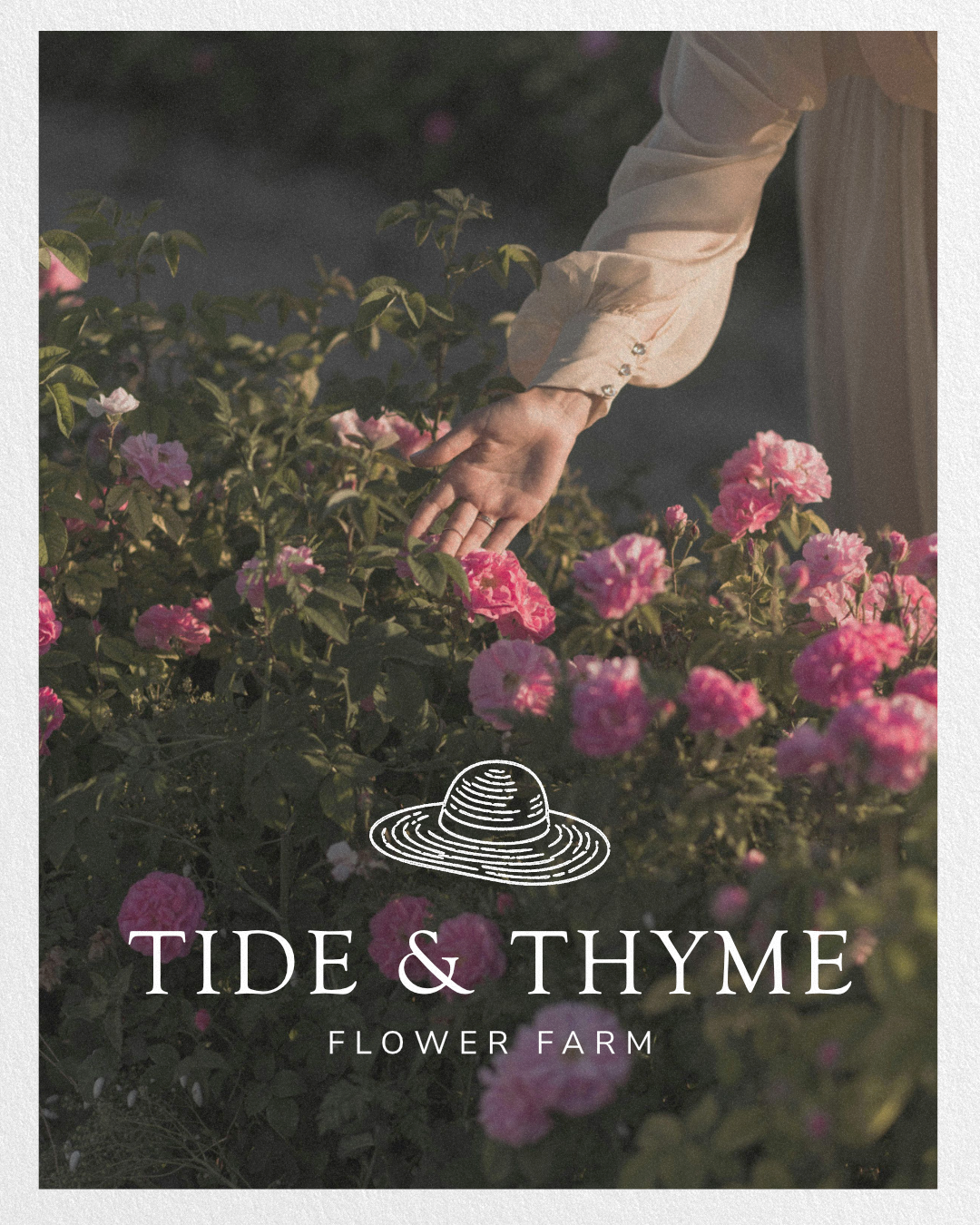
Tide & Thyme Flower Farm
What Happens When the Presentation Doesn't Match
I have worked with a wedding photographer whose service packages were, by any honest assessment, extraordinary. The hours she put in, the attention she gave each couple, the way she went above and beyond at every stage. Her couples knew it. The feedback was remarkable.
And yet her prices were sitting in mid-range territory, attracting enquiries from couples who were primarily budget-led.
That is the trap. People cannot know the value of something until it has happened and wedding suppliers cannot afford to wait for that moment.
The brand and the website have to do the communicating upfront. Before anyone reaches out, before a price is discussed, before there is any conversation at all. When they do not, the gap gets filled with assumptions.
And those assumptions tend to land somewhere around the level the presentation suggests, not the level the work actually occupies.
The work is already at the level you want to be recognised at. The brand just needs to catch up.
The Signs the Gap Is There
Not sure if this applies to you? These are the most common indicators:
You hesitate before sending your website link, or add an apology with it
Enquiries arrive asking about price before they have asked about anything else
Couples compare you to photographers or florists operating at a lower level
You are fully booked through referrals but the enquiries feel like the wrong fit
You have thought about a rebrand for over a year but client work always comes first
Your service has evolved significantly but the brand still reflects where you started
If more than two of these feel familiar, the presentation is likely holding the business back.
Price Only Gets Questioned When the Brand Hasn't Already Answered It

This is the part that most conversations about pricing miss entirely. The focus tends to land on confidence: be more confident, charge your worth, hold your rates. Those things matter. But confidence does not exist in a vacuum. It is built on something.
When a potential client arrives at your website and the experience they have there matches the reputation they have heard about you, the price becomes context rather than obstacle. They are not wondering whether you are worth it. They already know.
The enquiry they send is not the beginning of a conversation. It is a confirmation of a decision they have already made.
When the brand and website do not create that experience, the enquiry looks different:
The client arrives uncertain
They ask about pricing before they have asked about anything else
They compare you to others at a lower level
They want reassurance the investment will deliver
They are not difficult people. They have simply not been pre-sold. The goal of a considered brand and website is to make that pre-selling happen before a single word is exchanged.
The First Thing That Shifts When a Brand Finally Catches Up
When I work with a client and we reach the stage of sharing the creative brief, the document that takes everything from our conversations and their brand questionnaire and visualises where the project is headed through mood boards, colour, typography, and feeling, something shifts.
Almost every time.
It is not the finished brand. It is not the launched website. It is this early moment of seeing it all held together, and recognising the direction for the first time.
The response I hear, in different words from different people, is usually some version of: this is where I have been trying to get to. This is the space I have been waiting to occupy.
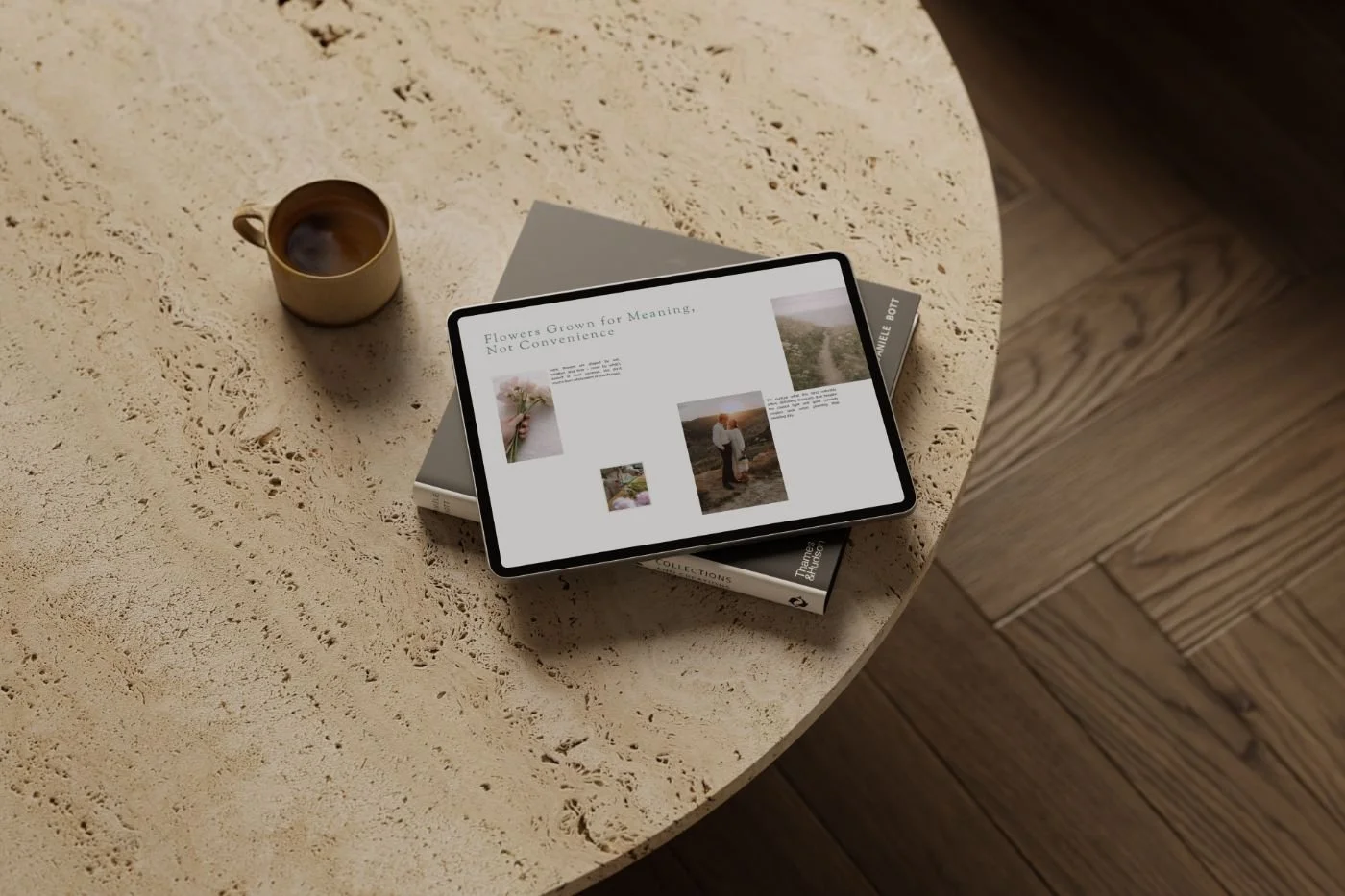
Tide & Thyme Flower Farm
Brand Assets
The first thing that changes is not the enquiry volume. It is the confidence:
The confidence to share the website without qualification
To raise prices without apology
To reach out to venues and collaborators knowing everything surrounding the work is operating at the same level as the work itself
To speak about the business with the same authority they have always had in the room, but now have online as well
That is genuinely hard to sell as a reason to invest in branding. It is intangible until it happens. But I have seen it, and it is real, and it tends to arrive earlier in the process than most people expect.
What the Gap Actually Looks Like in Practice
The disconnect between a business and its brand rarely announces itself clearly. It tends to sit in a few specific places.
The visual identity
Often the most obvious issue. It might be something built years ago and outgrown, a template that once served its purpose but now reads as generic, or something put together without an understanding of how visual language communicates value. Whatever the origin, the result is the same: a brand that belongs to an earlier version of the business.
The lack of cohesion
The website does not quite match the Instagram. The logo does not sit comfortably with the photography. The copy does not sound like the person behind it. None of it feels cohesive. That incoherence communicates something, even if a potential client could not name what it is.
The friction it creates
That disconnect shows up everywhere:
The hesitation before sharing a website link
The slight apology that accompanies it
The way a conversation about pricing feels harder than it should
When everything is cohesive and aligned, those frictions dissolve. Not because the work has changed, but because the presentation finally reflects it.
A Project That Illustrates the Point
Tide & Thyme is a passion project I completed for a fictional seasonal flower farm on the Devon and Cornwall border. It is a farm growing British flowers for couples who want their wedding flowers to mean something.
The brand needed to carry the same feeling as the farm itself: rooted, unhurried, deeply tied to a specific piece of land. Every element was considered:
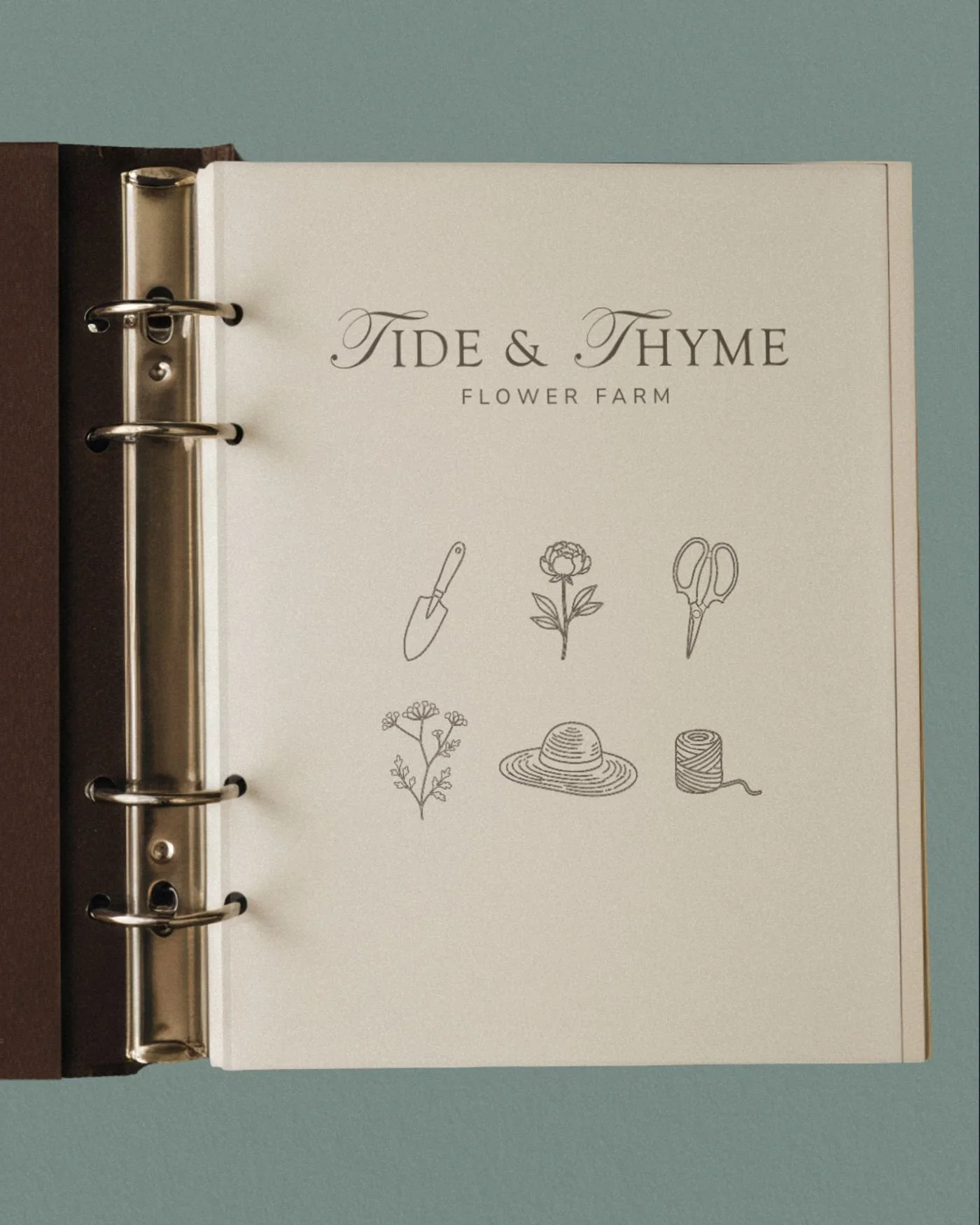
A straw hat mark and serif wordmark that feel as natural as the setting
A bespoke botanical icon set (trowel, peony, scissors, wildflower, sun hat, twine) giving the brand a visual vocabulary that works across every touchpoint
A coastal colour palette drawn from the South West coastline: cream, stone, dusty blue, sage, and near-black
A Squarespace website built to carry the story of the farm from the very first scroll
The result is a brand and website that does not need to explain itself. A potential client who finds Tide & Thyme online already understands, before a word has been read, what kind of business this is and what kind of experience they would have.
That is what the right brand does. It removes the friction before anyone arrives.
What This Means for Your Business
If the work is at a level the brand has not yet reached, the answer is not to focus harder on pricing strategy. It is to address the presentation. Not just the visual identity, not just the website, but the whole thing built together as one cohesive expression of what you do and the level at which you do it.
When story, strategy, and style are developed in tandem, the result has a coherence that cannot be achieved by addressing each piece separately. That coherence is what pre-sells. That is what makes a potential client arrive already certain.
That is what removes price from the centre of the conversation and replaces it with something more useful: desire.
If you are ready to explore what that could look like for your business, a discovery call is the right place to start. It is a conversation, not a pitch. It is an opportunity to look at where your brand and website currently sit, and what it would mean to bring them in line with the work you are already doing.