Secrets Your Wedding Brand Designer Wants You to Know
Most people come to me expecting a logo. A few new colours, maybe a font pairing, something to make the Instagram grid look a bit more put together. What they get instead is a full excavation of their business: why they started it, what they actually want their life to look like, and what has been holding them back from either. The logo still matters, but it's the outcome of that work, not the starting point.
If you've ever wondered what happens once you say yes to working with a brand designer, here's what it actually looks like.
Secrets your brand designer wants you to know
five things that happen before you ever see a logo
What happens when you hire a brand designer?
Every project I take on runs through the same framework: Story, Strategy, Style. Three stages, always in that order, because each one depends entirely on the one before it. You can't build a strategy without knowing the story, and you can't design anything meaningful without a strategy behind it.
I need to understand what you understand about your business, at a level deep enough that I can create from real connection rather than guesswork. That means knowing where you are now, where you actually want to end up, and what's standing in the way. Everything else follows from that.
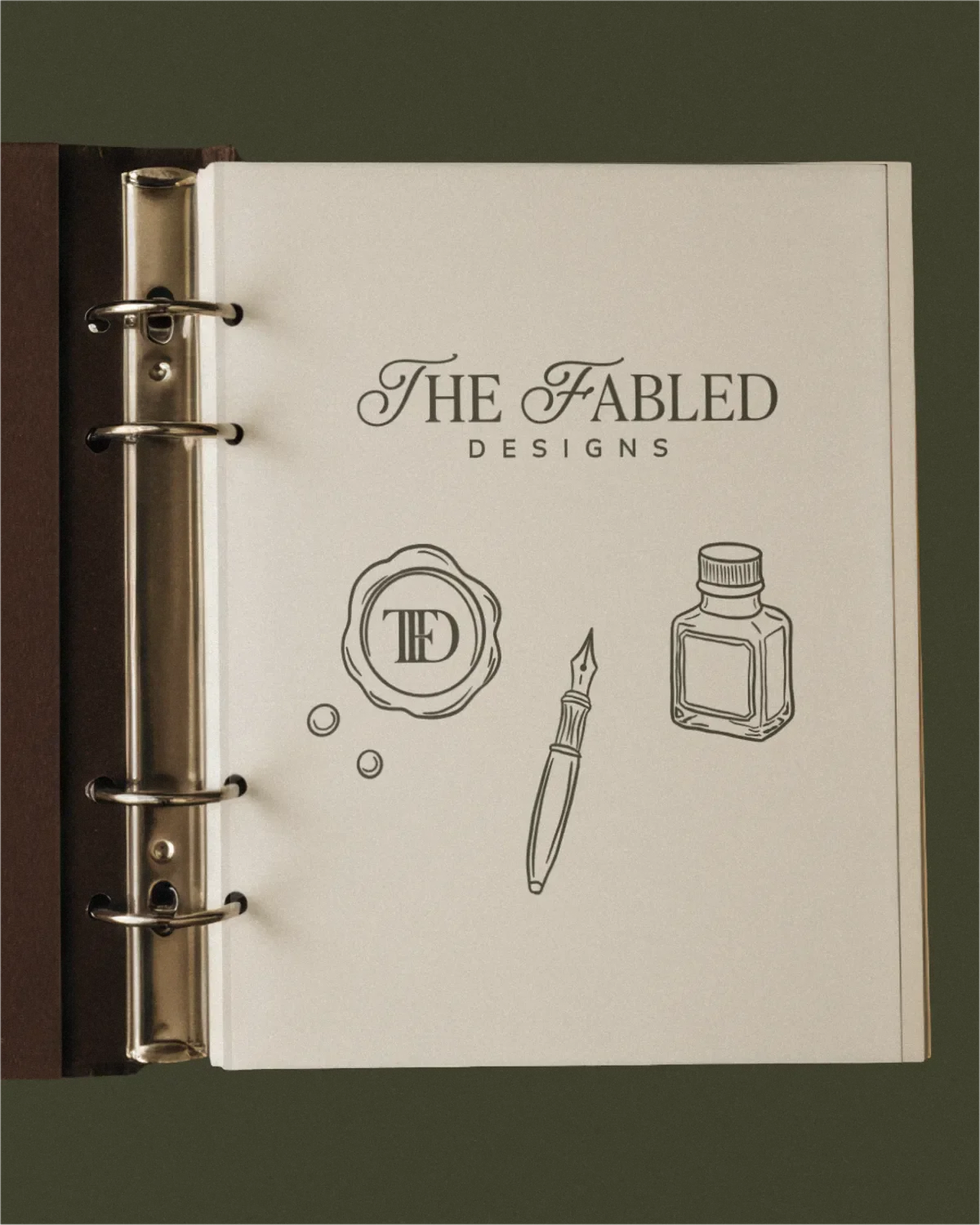
The Fabled Designs - Supporting Marks
It starts with your story, not your logo
I start by pulling out as much of your story and your voice as I possibly can, before a single colour or font gets discussed.
You answer detailed questionnaires both in written format and over video call, and I usually record those calls so I can go back and hear the exact words you used. I find most people find it easier to talk about their business than to write about it. Stressing over how something sounds on the page often gets in the way of what you're actually trying to say. I ask for the words to be your own, rather than AI-generated.
Your story has to come from you.
I've had clients send voice notes. I've had clients type out huge, unfiltered paragraphs about their fears and their goals, the kind of thing they think about right before they fall asleep. Too much is always better than not enough, because it gives me a far more rounded view of who you are and where we're heading.
One client's response to my questionnaire was exceptionally detailed. She had opened up about exactly what was on the line for her: where she felt she was struggling in her business, and what she hoped a rebrand could change. That level of detail let me see her situation with a clarity no AI-assisted first draft could have given me. It told me how much this actually mattered to her, before we got anywhere near a mood board.
What does a brand designer ask you?
The questions go further than most people expect. I ask about the history of the business and the history of its name, and whether that name is something you want to keep or something worth exploring in a rebrand. I ask who makes up the business, how long it's been running, and what values sit underneath it. I ask what you envision for your own life as a business owner, so the brand we build can actually support that life, whether that means higher prices, a different calibre of couple, or simply more room to breathe.
The questions dig into what lights you up, what you feel aligned with visually, and how you want your business to be experienced by the people who find it. It can feel a little raw. Not overwhelming, but more exposing than most people expect, because these are often things you've sensed but never quite sat down and worked through. That's exactly why it works.
Too much is always better than not enough. It gives me a far more rounded view of who you are and where we're going.
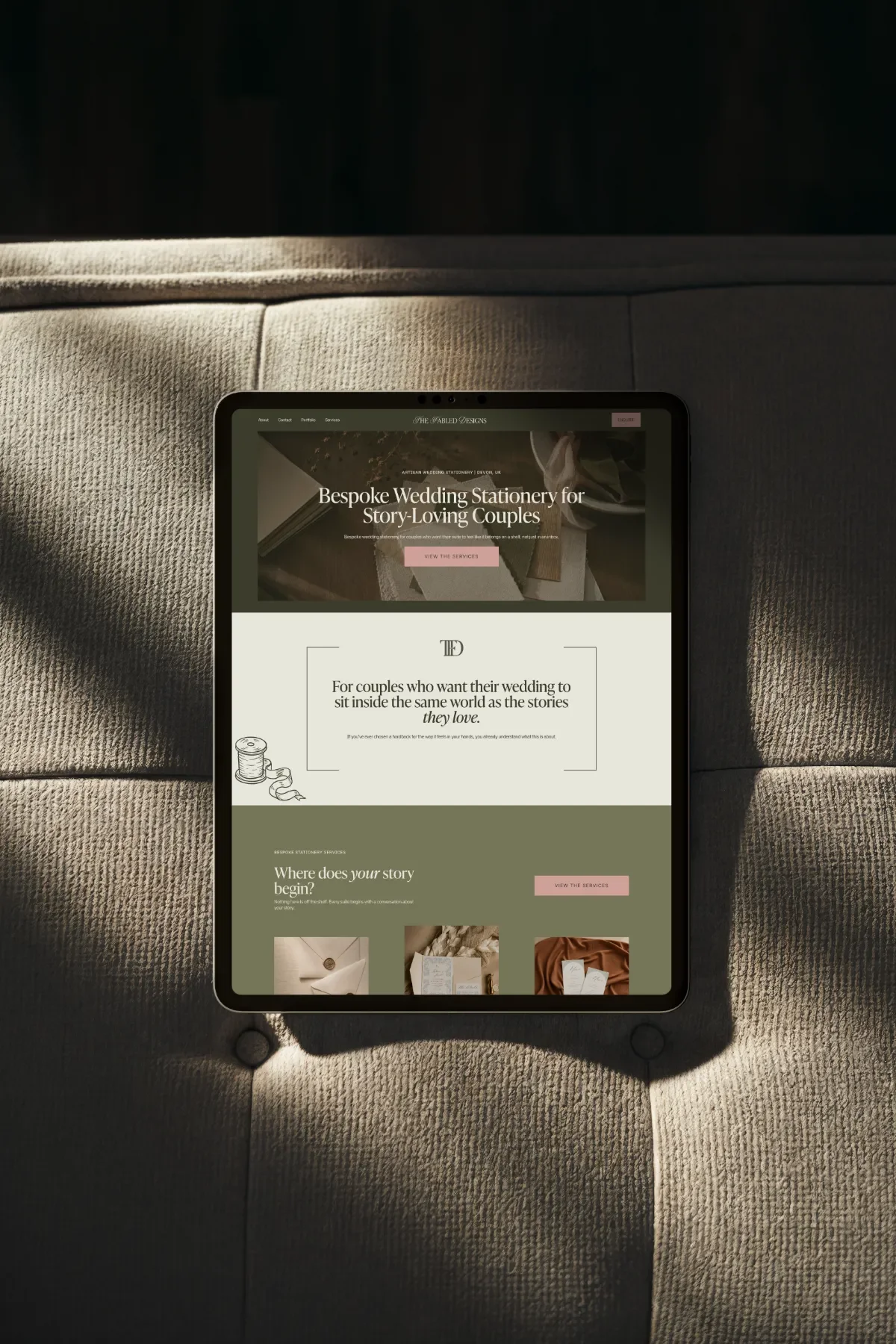
The Fabled Designs - Home Page
How does a creative brief come together?
Once I've got everything in writing, I go through it looking for what repeats. Words, phrases, feelings that come up again and again. On one recent project, the words reliable, calm, and honest kept surfacing throughout a client's answers. That told me exactly what kind of experience she wanted her couples to feel: safe, welcoming, and approachable, before I'd touched a single visual.
From there I build mood boards, usually four kinds: colour, photography, logo, and typeface. Anything mentioned along the way, a specific shade, a certain warmth, a tone that felt right, gets folded in here.
Everything comes together into a creative brief, which I then present back to you.
This is the moment I flip the mirror. I walk you through everything we've discussed and everything I've gathered, checking that I've understood it correctly before a single design decision is locked in. You tell me what you love, what doesn't feel like you, and where you want more of a particular direction. That conversation shapes everything that follows.
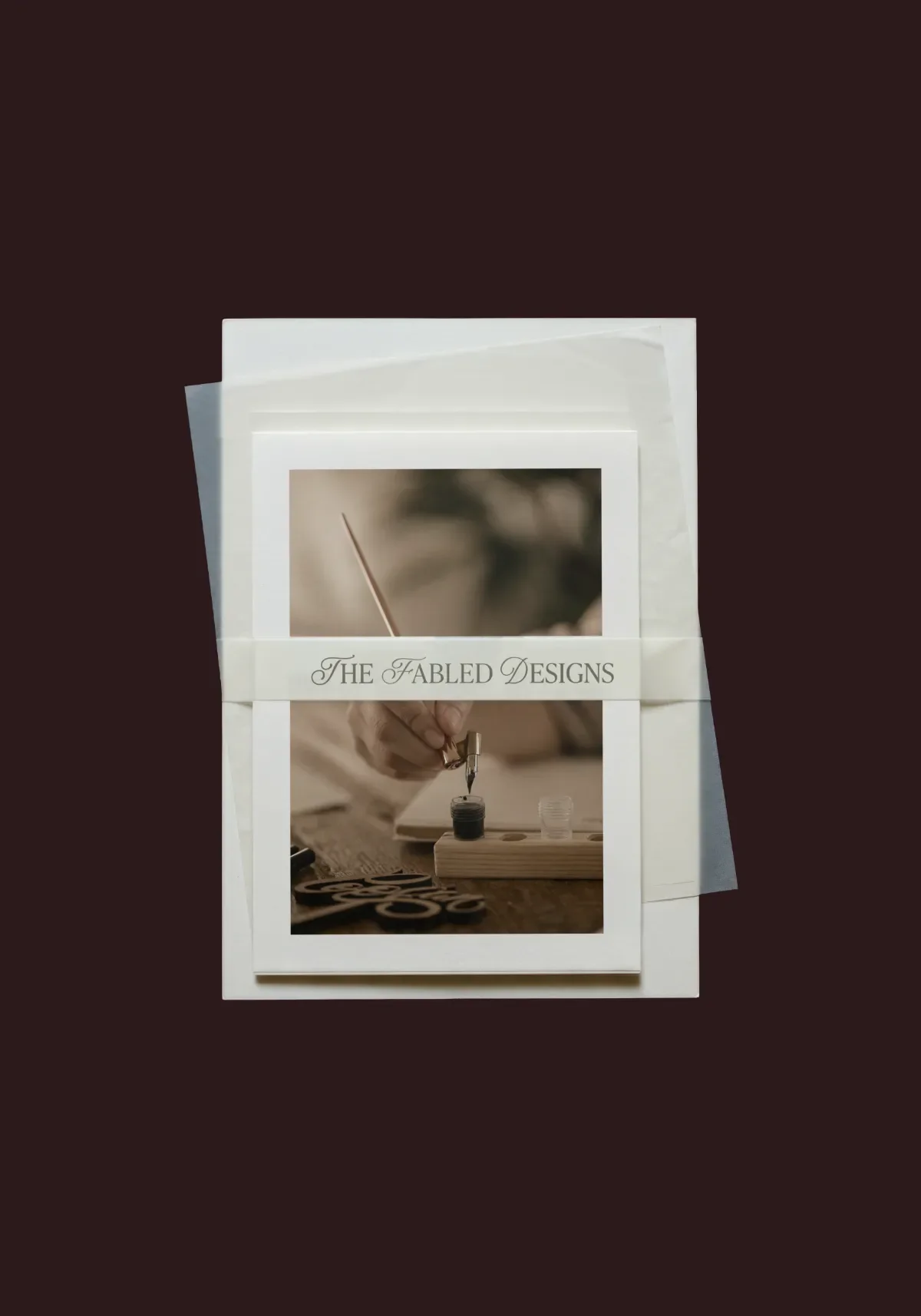
The Fabled Designs - Stationery Mockup
What happens once the strategy is approved?
Fonts and colours come first. Once a typeface is confirmed, moving into logo design becomes far more straightforward, because the two need to sit together from the start.
I present three colour palette options and usually three or four font pairings across headings, subheadings, and body copy, mixing paid and free options so there's plenty to react to. It's rarely a straight choice between one option or another. More often you love the heading font from one pairing and the body copy from a different one entirely, and we mix and match until it feels right.
Once fonts and colours are approved, logo design begins: a primary mark, a secondary version, and usually a monogram or emblem, depending on where and how your brand needs to show up.
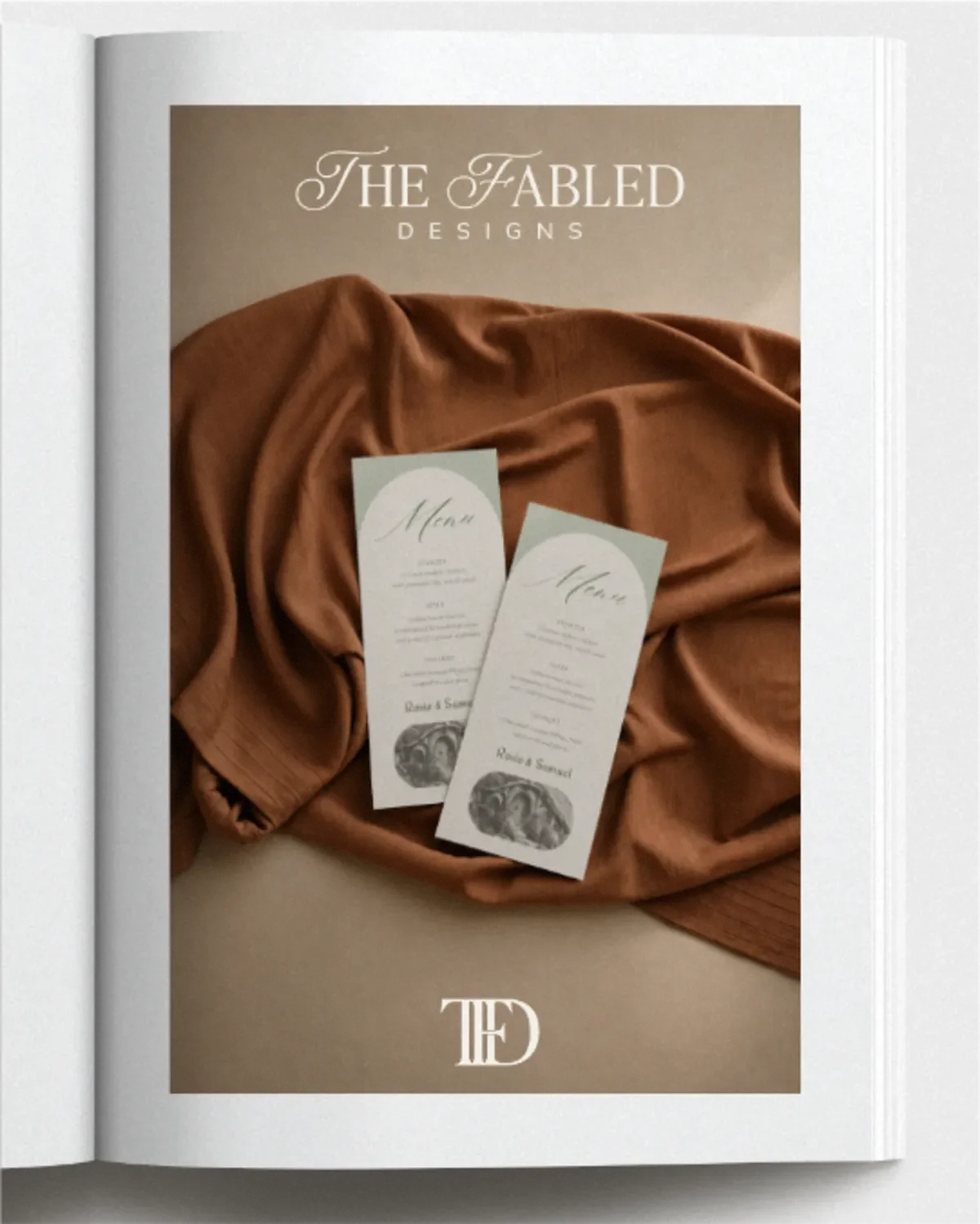
The Fabled Designs - Magazine Mockup
What do you walk away with?
Once everything is finalised, I build a full brand guidelines document: every logo variation, the colour palette, the typefaces, and mock-ups showing how it all looks in practice, on a website, on packaging, on a business card. It becomes a reference guide for you and for anyone you work with in future, whether that's another designer, a printer, or a web developer, so they know exactly what to work within.
Everything lives in my private client portal, along with video walkthroughs explaining the reasoning behind every decision, so you understand the why and not just the what. This is also where your final logo files and brand guidelines get delivered.
If I've done my job properly, the moment you first see the creative brief and the mood boards is usually the moment everything clicks. This is usually the moment where my clients are messaging me in all caps.
At final handover, I've had clients tell me they’ve been close to tears, because everything they've been working toward finally feels tangible.
It's the moment where everything you’ve been working towards comes together. It’s a really special moment for you, and for me.
This is what The Aretta Effect is built around: story leading strategy, strategy leading style, so the brand and website that come out the other side actually reflect the business you've built and the one you're moving toward.
Ready to see what your brand could look like?
If your business has outgrown the brand it's currently wearing, this is what it actually takes to close that distance properly, not with a quick logo swap, but with a process built around who you are and where you're going.
You can find out more about The Aretta Effect and what working together looks like here.
~
I'm Amy, the designer behind Studio Aretta, specialising in brand and web design for wedding professionals who are ready to be seen as the premium choice they already are. Click below to start your enquiry.